
Europe’s Quiet Heist: How the EU Turned Ukraine’s War into Their Mineral and Debt Machine
Opinion By ARiVL – All of this is my personal opinion and analysis based on open-source data and events as I saw them on [Dec 20, 2025]. Numbers and situations can shift; this is a snapshot, not gospel.
Ukraine’s soldiers are true fighters—men and women paying in blood amid the rubble of towns like Pokrovsk and Dnipro, holding the line against an invader that crossed their borders unprovoked. They didn’t choose this war, and like any real boxer deep in the rounds, they’re not about to quit while the punches are still landing. Respect to that determination, it’s bought the West precious time and forced a reckoning with old assumptions.
But picture Ukraine as that boxer in the ring: attacked out of nowhere, taking heavy hits, with valuable resources (critical minerals in its eastern regions) being seized or contested in the chaos. Fighters mid-bout don’t think about long-term strategy—they focus on survival and landing the next punch. Asking them to make perfect, calm decisions about the purse or future fights while dodging blows isn’t fair.
That’s where the two “cornermen” come in. One—the United States—is trying to guide the fighter toward a strategic stoppage: end the bout in a position of strength, with security guarantees and resources intact, so Ukraine can train up and have a shot at the title down the road. The other—the European Union—acts more like a shady promoter. They’re stirring the fight to drag it out, draining the boxer’s energy through endless loans and debt traps, grabbing mineral rights as collateral, all while being unqualified (modern leaders) to truly coach or rebuild.
This piece isn’t about blaming the fighter getting punched in the face. It’s about exposing the truth: one ally is draining the purse, hiding behind American numbers (aid, troops, weapons), and playing games with everyone else’s lives as if they’re disposable meat shields—all while projecting their opportunism onto others. There is room for nuance, but it’s long already.
The Attack and the Stakes: Why Ukraine’s Resources Matter
Russia’s full-scale invasion of Ukraine in February 2022 turned a simmering conflict into an all-out war, with Russian forces seizing or contesting large parts of the eastern and southern regions—like the Donbas and areas around the Black Sea. These aren’t just any territories; they’re home to some of the world’s richest untapped deposits of critical minerals—raw materials essential for modern technology and defense that the West desperately needs to diversify away from heavy reliance on China.
Here’s why these minerals are such high stakes, explained simply:
- Gallium (Ga) and Germanium (Ge) — Obscure elements used in advanced semiconductors, radar systems, night-vision gear, satellites, and high-efficiency solar panels. China refines about 99% of the world’s gallium and over 60% of its germanium—one export ban (like those imposed in recent years), and Western fighter jets, chips, and tech could face severe shortages.
- Lithium — The key ingredient in rechargeable batteries for electric vehicles, phones, and energy storage.
- Titanium — A super-strong and lightweight metal vital for aircraft (like fighter jets) and aerospace.
- Graphite — Used in batteries and as a lubricant in industrial applications.
Ukraine ranks among Europe’s top holders of these resources, with massive deposits that could help break China’s near-monopoly if developed westward.
The war has made extraction nearly impossible in contested areas, effectively stealing these assets from Ukraine’s control while the fight rages. Adding insult to injury, the lingering Soviet-era infrastructure hampers everything. A prime example: most Ukrainian railways east of Kyiv still use the old Russian “broad gauge” (1520mm track width), while the European and NATO standard is narrower (1435mm). That slight difference means trains carrying aid—weapons, ammo, vehicles—can’t roll straight through from Poland without time-consuming transfers or bogie swaps.
This bottleneck severely limited rapid, large-scale supply flows during Ukraine’s defense—delaying the very tools needed to push back. Ironically, the same outdated setup sometimes slowed Russia’s initial advance as well. But now, the minerals at the heart of proposed deals (including gallium and germanium for Western tech/defense) are the ones being tied up or diluted through EU-influenced negotiations—EU whispers that have helped stall frameworks meant to secure them westward.
The 30-Year Backstory: America’s Prepaid Bet
For three decades before Russia’s 2022 invasion, the United States invested heavily in helping Ukraine break free from Soviet-era dependencies and align more closely with the West. The goals were straightforward: convert railway tracks to a NATO-standard gauge for faster compatible logistics, build reverse-flow gas pipelines to reduce Russia’s energy leverage (through its state giant Gazprom), upgrade power grids, and develop refineries to process Ukraine’s critical mineral deposits westward—diversifying global supply chains away from Moscow and, increasingly, China.
This wasn’t charity; it was strategic. U.S. spending pre-2022 ran into tens of billions, with over $5 billion from USAID alone focused on infrastructure and governance reforms. Much of this occurred under Republican administrations, which viewed Ukraine as a potential secure source of minerals and a buffer against Russian influence.
When the invasion hit in 2022, the scorecard showed how little had been delivered:
| Era | U.S. Commitment Focus | Outcome by 2022 |
|---|---|---|
| 1995-2010 | $2B+ for rail gauge conversions and early infrastructure | Partial progress on some tracks; Russian broad gauge (1520mm) still dominates east of Kyiv |
| 2010-2020 | $3B+ for gas reverse-flow projects and grid upgrades | Loans and plans routed, but Gazprom leverage largely intact; heavy reliance on Russian energy |
| 2020-2022 | $1B+ toward critical mineral refineries (including gallium/germanium) | Consultants hired, but zero operational plants; deposits remained tied eastward or undeveloped |
The decoupling never fully happened. Money flowed in, but the promised infrastructure—rails, pipelines, refineries—largely evaporated amid delays, competing priorities, and other factors.
Since 2022, U.S. aid has totaled around $130-175 billion (depending on counting military replenishment and long-term commitments), with the bulk in direct grants and equipment transfers. Europe’s collective aid has topped €200 billion in the same period. Still, it’s heavily skewed toward loans—often framed as “reparations”—using yields from frozen Russian assets that don’t belong to the EU outright.
This contrast—U.S. grants-heavy vs. Europe’s loan-heavy—sets the stage for how the two “cornermen” have approached Ukraine’s fight differently.
The Cornermen: U.S. vs. EU Strategies
In the boxing ring, the fighter relies on cornermen for advice, cuts stopped, and strategy between rounds. Ukraine (unfairly) has two primary ones in this war: the United States and the European Union. Their approaches differ sharply, reflecting different visions for how the fight should end and what comes after. This is how I currently see these strategies.
The U.S. is focused on a strong, sustainable future. It pushes for negotiated settlements with robust security guarantees—allowing Ukraine to stop the immediate bleeding and rebuild its military, infrastructure, and economic strength, positioning it for a potential comeback as a sovereign nation free from Russian or Chinese dominance. A key example is the April 2025 U.S.-Ukraine Reconstruction Investment Fund agreement, now fully operational and eyeing its first deals in 2026. This framework created a joint fund, partly capitalized by revenues from Ukraine’s natural resources (including critical minerals), giving the U.S. a role in development while aiming to fund reconstruction and provide a fair mechanism tied to past American support. The goal: secure diversified supply chains for the West and help Ukraine emerge stronger, not perpetually indebted.
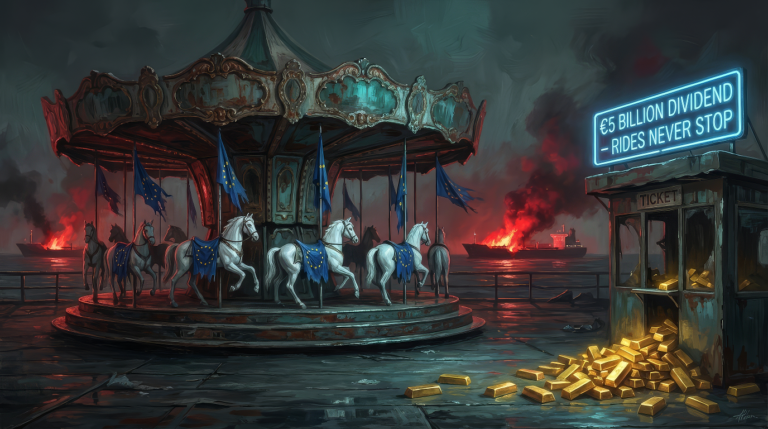
The EU, by contrast, has leaned toward prolonging the rounds through heavy loans (often secured against future mineral revenues and using yields from frozen Russian assets as collateral), while pushing “diversification” language that positions European firms for priority access in rebuild projects. This has included bilateral talks (e.g., France on titanium) and frameworks that critics say dilute exclusive or priority arrangements, focusing more on ongoing cash flows and leverage for European industries than a quick path to independence.
Fighters, when deep in rounds and taking hits, rarely want to hear “quit” or “settle”—even if it’s strategically smart for long-term health. Their instinct is survival and victory. That’s why good cornermen exist: to make the tough calls the fighter can’t make in the heat of the moment, protecting their career beyond the current bout. Ukraine shouldn’t be forced to choose strategies or coaches (not that they need one) mid-fight, while exhausted and under fire; clear, unified support would best serve the fighter.
Europe’s Track Record: Unqualified to Promise Rebuild
(This does not reflect my view of EU citizens)
The European Union was rebuilt twice with massive American help: the Marshall Plan after World War II poured billions (equivalent to hundreds of billions today) into Western Europe to reconstruct economies and infrastructure. Post-Cold War, U.S. aid and NATO investments helped integrate Eastern Europe. Yet when it comes to managing large-scale infrastructure at home, the EU’s record raises serious questions about its ability to deliver on grand promises abroad.
Major projects often become symbols of perpetual delays, exploding costs, and unfinished scaffolding:
- HS2 (UK high-speed rail): Planned as a flagship link from London to Birmingham and beyond, it’s been plagued by setbacks. As of late 2025, completion of the core section has been delayed beyond 2033 (with some estimates pushing to the late 2030s), costs have ballooned to potentially £100 billion+ (from original ~£30-40 billion estimates), and northern extensions remain deferred or scaled back amid ongoing resets and political blame-shifting.
- Stuttgart 21 (Germany rail hub overhaul): Started in 2010 with an original opening targeted for 2019-2021, it’s now delayed again beyond 2026 (likely into 2027 or later due to technical and signaling issues). Costs have tripled from ~€4-5 billion to over €11 billion, with ongoing geological challenges and bureaucratic hurdles.
These aren’t isolated; many EU infrastructure initiatives face similar bureaucratic delays, contract favoritism, and cost overruns—scaffolding up for years while progress stalls.
Yet Europe talks of a €506 billion reconstruction for Ukraine (per 2025 World Bank/EU/UN estimates for the next decade)—a war-torn country far larger and more damaged than any post-WWII rebuild. The reality: promises risk becoming another layer of perpetual planning, with European firms prioritized amid delays.
Meanwhile, the EU hedges with China: despite tariffs on Chinese EVs, deals continue on batteries and local factories (e.g., Hungarian plants, ongoing minimum-price talks), while posturing toughness on Russia—yet running side energy imports or quiet partnerships in some sectors. More on the EU and adversarial benefits
People may (understandably) dislike entities like BlackRock for their scale and influence. Still, firms like that—or qualified private investors—bring real incentives to finish projects efficiently, on time, and with accountability tied to results. The EU’s track record suggests bureaucracy over execution.
The Heist Mechanics: How Europe Leverages What Isn’t Theirs
Here’s how the system works, step by step—for anyone hearing about this for the first time:
After Russia’s 2022 invasion, Western countries froze around €210 billion in Russian central bank assets (mostly held in Belgium at Euroclear). These aren’t confiscated outright—Russia still legally owns the principal—but the assets can’t be accessed, and they generate annual “windfall” profits (interest) of several billion euros (e.g., €3.7 billion in 2024 alone).
The EU takes those profits (seen as not belonging to Russia due to sanctions) and uses them in two main ways:
- Directly for some Ukraine support.
- More importantly, as collateral to borrow larger sums on financial markets, then lend that money to Ukraine as “reparations loans.”
The result: Ukraine gets cash now (e.g., leaders just settled on a straight €90 billion loan package for 2026-2027 backed by EU budget headroom, with no principal frozen—still mostly loans, with repayment tied to future Russian reparations). These loans are often secured against Ukraine’s future revenues, including from critical minerals.
This creates a debt trap: Ukraine borrows to survive the war, but ends up owing long-term, often with European firms getting priority on rebuild contracts and mineral access as the “payback.”
Overall EU aid (including member states) since 2022 totals around €197 billion, of which roughly 35% is loans (highly concessional, but still debt), while grants/in-kind make up 65%. Military aid is more grant-heavy, but financial support skews loans.
| Donor/Example | Aid Type (2022-2025) | Mineral/Resource Tie-In |
|---|---|---|
| France | Loans + sales/training | Priority on titanium for aircraft, lithium deals |
| Germany | Mixed, but loan-heavy in financial | Graphite for batteries, rebuild contracts |
| EU Overall | ~35% loans, 65% grants/in-kind | Loans often secured on future revenues/minerals; frozen-asset backing |
On the military side, Europe talks tough about confronting Russia, but its deployable forces are limited. Combined European active troops are substantial on paper (~1.5-1.6 million), but rapid high-intensity deployment capacity is far short—estimates say Europe would need 300,000 more troops and €250 billion+ annual spending hike to deter Russia alone without full U.S. support. Yet leaders posture as if ready for direct conflict, relying heavily on American backbone (logistics, air power, munitions) while leveraging U.S. aid to keep the fight going. All while taking the morality finger from their ass and pointing it at us. Ukraine is just a victim in need.
The American Pivot: Learning the Lesson
The frustrations and stalled outcomes of the past three decades—combined with the diverging approaches from Europe’s “cornerman”—point to a clear path forward for the United States: pivot toward supply chains we can secure independently, without relying on promises that evaporate or get diluted by competing EU agendas.
This means accelerating domestic production of critical minerals like gallium and germanium (pilots in Texas red mud and Utah already scaling), expanding “friend-shoring” partnerships in Africa (such as the U.S.-backed Lobito Corridor rail project linking mineral-rich Angola, Zambia, and the DRC to Atlantic ports), and building direct stockpiles under programs like the Defense Production Act.
In my view, America should honor Ukraine’s fight and the time it has bought by focusing future support in ways that directly strengthen Western resilience: grants where needed, but no more open-ended blank checks that can be leveraged or redirected by others for their own long-term gains.
By building independent, reliable sources for these vital materials, the U.S. protects its own defense and tech edge while reducing the risk of repeating 30-year cycles of prepaid bets that don’t deliver. It’s not walking away from allies—it’s learning the lesson and securing the future on terms the EU can’t whisper away.
Epilogue: Who’s Really in Ukraine’s Corner?
Step back from the ring for a moment and look at the two cornermen again.
One—the United States—has been pushing for a way to end the fight without destroying the boxer: security guarantees, a fair repayment mechanism tied to resources, and a path for Ukraine to rebuild strong enough for a future shot at the title as a genuinely independent, sovereign nation.
The other—the European Union—has steered toward dragging the rounds out longer: loans that build debt, collateral from assets not entirely theirs, priority access for their firms, all while quietly hedging with the very powers (China on batteries and EVs, lingering Russian energy ties in some corners) they posture toughest against. It’s as if the promoter wants perpetual action—not for the fighter’s career, but for the gate receipts, the side bets, and the long-term leverage.
Ukraine deserves allies who put the fighter first, not ones who tamper with each other’s strategies or run background deals with the opponent’s camp.
Vibe Question: When one cornerman fights for the boxer to live strong and reclaim the title someday, and the other stirs endless rounds for the purse and the leverage—who’s really in the fighter’s corner?
Also poop. This is my opinion as of Dec 20, 2025. Things can change. Contact via X