
The Great Wobble: Two Wedges, No Waiting
(ARiVL – Opinion. All of this is my personal opinion and analysis based on open-source data and events as I saw them on [Dec 4, 2025]. Numbers and situations can shift; this is a snapshot, not gospel.)
December 4, 2025. In the space of a single week, two photographs ricocheted around the planet and refused to fit the old script.
First: Narendra Modi personally greeting Vladimir Putin on the tarmac in New Delhi, arms flung wide like they were old war-college roommates. Second: Donald Trump, two days later, says something like: “Russia has GREAT minerals, folks!” Signaling (to me) the Ukraine deal is fine, but he is interested in deals with RU.
Two men who, according to every front-page narrative of the last four years, should still be locked in existential combat, suddenly looked a lot more like potential business partners. Their respective “allies,” meanwhile, watched in something between confusion and quiet panic.
This is not another tired article claiming “BRICS is winning” or “NATO is collapsing.” Both slogans feel like 2022 software still trying to run on 2025 hardware.
Something stranger is happening. Inside both grand alliances, the ground is wobbling at the same time. Old fault lines aren’t widening; new ones are cracking sideways. Continents of interest (resources, manufacturing, energy) appear to be drifting away from continents of regulation (sanctions, green deals, frozen-asset yield games) while everyone pretends the map hasn’t already changed.
What follows is not a prediction. It’s a possibility map: five quick dispatches from the capitals that matter most, followed by the one question none of the official briefings dare ask out loud.
Turn the page if you, too, have started to feel the wobble.
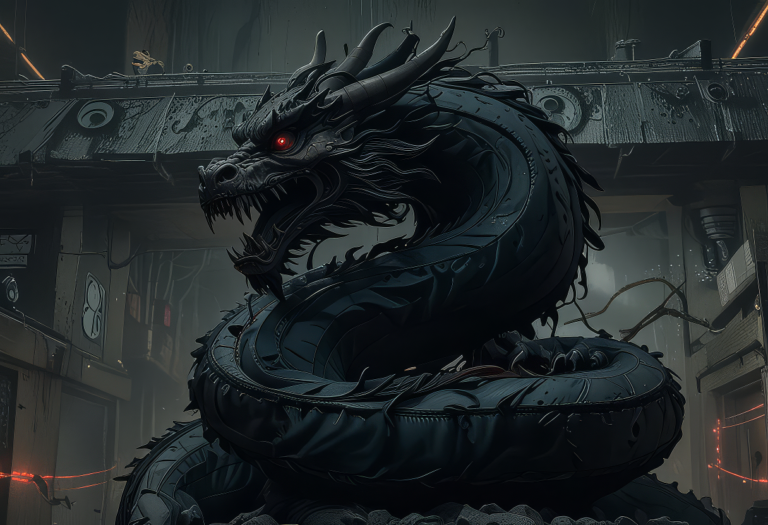
China – The Dragon That Suddenly Needs Friends It Can’t Fully Trust
For years, Beijing’s playbook was simple and brutal: control the critical chokepoints (gallium, germanium, graphite, rare-earth refining) and watch the rest of the world line up to pay tribute. The December 2024 export bans on Ga/Ge were supposed to be the ultimate flex. Instead, they lit a global fire under every alternative supply chain on the planet.
Prices spiked, yes, but the bans also handed Washington, Delhi, and even Brussels the perfect political cover to fund domestic circuits, African friend-shoring, and, quietly, Russian Arctic bypass routes. By late 2025, the monopoly is still there on paper, yet it’s leaking faster than anyone in Zhongnanhai wants to admit.
On the diplomatic front, the picture is just as awkward. The 2024 border-patrolling deal with India brought calm along the LAC, but it didn’t buy trust. When militants struck Kashmir again in spring 2025, Indian officials pointed fingers at Pakistan-based groups; Chinese statements were studiously neutral, which Delhi read as another quiet veto in Islamabad’s favor. At the same SCO summit, Modi and Xi smiled for the cameras, yet Indian graphite auctions and Russian tech-transfer deals kept landing like punches below the belt.
And then there’s Russia. Publicly, the “no-limits” partnership is still on the brochure. Privately, Beijing has watched Moscow ship Arctic drilling rigs to Indian state companies, offer joint rare-earth plants in Siberia, and, most stinging of all, float mineral deals to Washington that explicitly sidestep Chinese refiners. No public tantrums from Beijing, of course, just longer silences in the bilateral channels and a sudden surge in Chinese purchases of Brazilian and African ore before anyone else locks it up.
Across the Atlantic, Europe remains the only major customer still buying Chinese EVs and solar panels at scale, yet the EU keeps layering on tariffs, carbon-border taxes, and secondary sanctions on Chinese banks that touch Russian money. Brussels needs Beijing as a hedge against Trump, Beijing needs Europe as a market, but neither side trusts the other to stay bought.
Vibe question: When did China go from being the one doing the balancing to discovering, almost by accident, that everyone else is now balancing against it?
United States – The 4-Year Wildcard That Might Outlive Four Years (or Might Not)
On paper, the United States has never been better positioned to break out of the 2022–2025 straitjacket. A second Trump administration is openly shopping for transactional détente with Moscow, floating everything from G8 reinstatement to joint Arctic extraction. In a February 2025 interview, Putin says Russia has “an order of magnitude more” rare earths than Kyiv, and Moscow is “ready to work with our foreign partners, including the Americans.” The casual smirk still lingers in my memory bank—that tiny chuckle with the singular bodily bounce, heh, and a physical bounce lol. That smirk is still hanging in the air like cigar smoke, and the April US-Ukraine mineral framework—intended as repayment for decades of aid—could, in theory, be quietly rewritten or superseded by a cleaner bilateral deal with Russia itself. Domestic gallium-from-red-mud pilots are scaling, Africa friend-shoring deals are already inked, and the CHIPS Act money is finally flowing to actual fabs.
Yet something keeps jamming the gears.
Every time a serious US-Russia back-channel surfaces (Kushner-Witkoff Moscow trips, Exxon-Rosneft restart whispers, or even mild State Department language about “territorial realities”), a predictable chorus inside Washington erupts with fresh warnings about “appeasing Putin” and “betraying Ukraine.” The same voices reliably push new sanction packages, demand iron-clad NATO Article 5 language for Kyiv, and leak stories framing any mineral deal that bypasses Brussels as “extractive colonialism.”
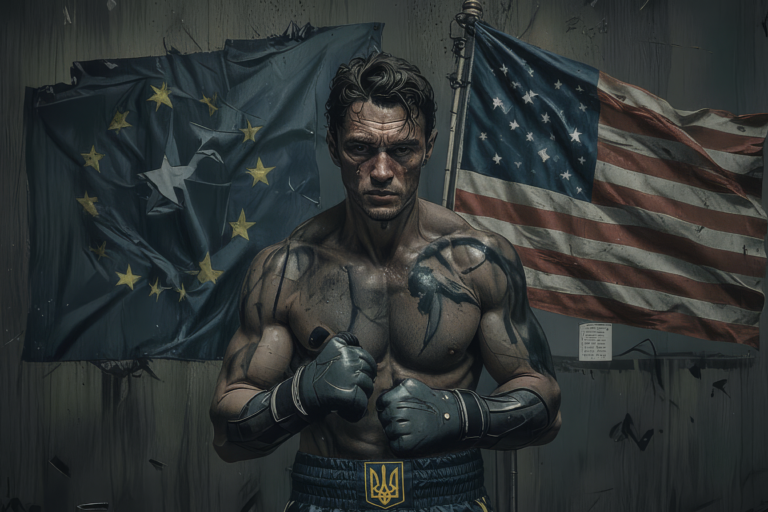
Here’s the uncomfortable question no one in polite DC company asks out loud: Are certain American politicians and permanent bureaucrats financially or politically invested in keeping eastern Ukraine in limbo precisely because a frozen conflict—and the accompanying sanctions regime—still pays dividends to transatlantic networks they’re part of? The friction itself has become a revenue stream: defense contracts, reconstruction loans routed through European banks, frozen-asset yield games, consultancy sinecures, and the soft power that comes with being the loudest voice “standing with Ukraine.” A quick, dirty peace (or a US-Russia side deal that locks in minerals without EU veto rights) threatens all of that.
It’s not necessary to name names for the pattern to feel real: the loudest anti-détente voices routinely sit on committees that oversee Ukraine aid tranches, take meetings with the same European think-tanks that benefit from perpetual crisis, and watch their campaign coffers fill from exactly the contractors who profit when tensions stay high.
So the real 2025 tension inside the United States isn’t left vs. right anymore; it’s executive-branch realists who want to flip the board versus a bipartisan transatlantic lobby that makes its living dragging the fight out one appropriations bill at a time.
Vibe question: Can a four-year presidential window outrun a thirty-year grift embedded in the committees, the think-tanks, and the revolving doors? Or will the wrench-throwers slow the US down just long enough for China and the EU to lock in their own workarounds?
European Union – The Regulatory Empire Losing Its Chaos Dividend
For two decades, Brussels built the most sophisticated money-printing machine in history, and it ran on one fuel: controlled crisis.
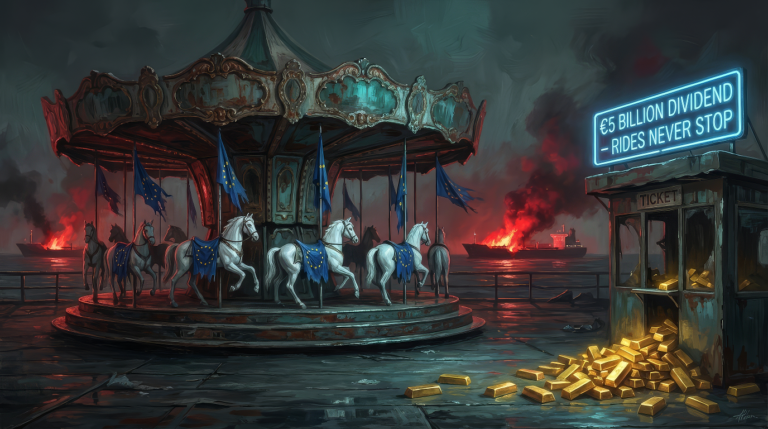
Sanctions packages, frozen Russian assets generating €5–6B a year in “extraordinary revenue,” reinsurance premiums on the shadow fleet, carbon-border taxes, green-bond loopholes, reconstruction loans routed through European banks; all of it required permanent tension but never outright collapse. The war in Ukraine, the energy shock, the endless “de-risking” from China; each new emergency was another excuse to expand the rulebook and collect the tolls.
In 2025, that machine suddenly started coughing.
Every time Washington and Moscow edge toward a minerals-for-peace side deal, Brussels issues frantic statements about “European security” and “shared resources.” When Trump’s team floated rewriting the April US-Ukraine mineral pact into something cleaner with Russia, EU foreign-policy chief Kaja Kallas warned that any arrangement that excludes Europe would “pile pressure on the victim.” Translation: if the fighting stops and the assets get unfrozen, the dividend disappears.
Meanwhile, Europe is trying to keep China on side as a tariff shield against Trump, yet it can’t stop itself from slapping new duties on Chinese EVs and sanctioning Chinese banks that touch Russian payments. Beijing notices. The feeling is mutual.
Inside the Union, the cracks are louder than ever. Hungary and Italy openly flirt with bilateral energy and defense deals that don’t need Brussels permission. Germany’s industry screams about de-industrialization while France pushes for “strategic autonomy” that somehow still needs American troops. The loudest pro-Ukraine voices in the European Parliament are often the same ones who sit on the boards of reconstruction funds and green-transition consultancies.
Vibe question: What happens to an empire whose entire business model is managed tension when the two biggest players on the board start shopping for ways to turn the tension off? Does the machine quietly downsize, or does it double down and try to keep the crisis alive by any means necessary?
India – The Side Game That Might Actually Be the Main Game
India was never supposed to be this comfortable in the middle of a global wobble. Yet here it is, in late 2025, looking like the only capital that wakes up every morning with more options than it had the night before.
It still buys 40 % of its crude from Russia, pays in rupees, and just signed a ten-year extension on S-400 deliveries and Su-57 co-production. At the same time, it’s taking GE F-414 jet engines, MQ-9B drones, and semiconductor co-investment from Washington like it’s the most natural thing in the world. Modi hugs Putin on the tarmac, hugs Trump at the Quad, poses with Xi at the SCO, and somehow nobody calls it hypocrisy, because everyone needs something Delhi now controls.
That something is mostly underground: lithium, graphite, rare-earths, and the refining capacity India is building at warp speed. Six critical-mineral auction tranches in 2025 alone, royalty rates slashed to zero on graphite and other battery metals, Russian tech transfers for magnet plants, American money for downstream fabs. Every month, another block of the Chinese refining monopoly quietly changes hands.
Beijing watches Indian companies bid on Arctic blocks with Rosneft and quietly fumes. Washington watches India lock up African lithium before EU funds even leave Brussels and quietly cheers. The EU watches India buy discounted Russian crude that keeps global oil prices from spiking and quietly seethes, because cheaper energy undercuts the entire European green-tax fortress.
India doesn’t lecture, doesn’t posture, doesn’t pick a team. It just keeps stacking options the way other countries stack missiles.
Vibe question: Has anyone else noticed that the country everyone assumed was “non-aligned” might actually have become the new swing producer, not just of oil or manpower, but of great-power alignment itself? When the music stops, will India still be sitting in the only chair with extra legroom?
Russia – The Quiet Architect of the Wobble
Everyone still talks about Russia as the isolated aggressor, the country that supposedly bet everything on a “no-limits” friendship with China and lost. That story is three years out of date.
In late 2025, Moscow is running the most sophisticated balancing act on the board, and almost nobody in Western newsrooms has noticed.
Step one: keep just enough tension with NATO alive so that Brussels never gets comfortable enough to declare victory and go home. Step two: use that same frozen conflict as leverage to force every other player to bid for Russian resources on Moscow’s terms.
Watch how it plays:
- With India: Arctic drilling rigs, joint rare-earth plants, graphite tech transfers, BrahMos missile sales to Russia’s old Soviet clients. All designed to give Delhi the tools to undercut China’s refining monopoly without ever forcing Russia to choose between Beijing and New Delhi.
- With Washington, the February 2025 “we have plenty of minerals” public offer was repeated privately through every back-channel Trump opened. Siberia and the occupied east of Ukraine are quietly packaged as the cleaner, faster alternative to the EU-lawyered mess in Kyiv.
- With China: still the biggest buyer of Russian energy, still the partner for Power-of-Siberia 2 and joint moon-base talk, but no longer the only buyer. Moscow makes sure Beijing feels the diversification without ever saying it out loud.
- With Europe: keep the sanctions machine spinning just fast enough that frozen assets keep generating yield for Brussels, but never let the war end in a way that forces Russia to give those assets back. The perfect hostage scenario.
Russia isn’t trying to win the old war anymore. It’s trying to make sure both old blocs lose at the same time, then sell the pieces to the highest bidder while the table tilts exactly the way Moscow wants.
Vibe question: When did Russia stop being the desperate sidekick in someone else’s story and quietly become the guy who removed the leveling feet from the table while everyone else was still arguing about who gets to sit at the head?
Epilogue – So What the Hell Is Actually Going On?
Step back from the noise for ten seconds, and two clean wedges appear where the old BRICS vs NATO map used to be.
Wedge A – The Continental-Resource Core Russia + India + the parts of the US executive that just want to make deals and go home. They trade in oil, metals, missiles, Arctic routes, and quiet handshakes. No sermons, no carbon taxes, no thirty-year reconstruction plans. Just title to the stuff in the ground and the fastest way to get it above ground.
Wedge B – The Finance-Regulatory Core EU institutions + Beijing + the slice of the US permanent bureaucracy that still earns a living from managed tension. Their currency is sanctions packages, frozen-asset yield, green-bond loopholes, reconstruction loans, and the soft power that comes with being the loudest voice “standing with” whoever is bleeding this week.
Look back at the five dispatches:
- China is stuck holding more and more of Wedge B while its monopoly leaks to Wedge A.
- The US executive is trying to jump from Wedge B to Wedge A and keeps getting tripped by its own rear guard.
- The EU is fighting tooth-and-nail to keep Wedge B alive because actual peace would bankrupt its business model.
- India is happily selling to both wedges and watching the bids climb.
- Russia is the quiet engineer who tilted the whole table so the two wedges could form in the first place.
This is not a grand conspiracy. It’s a messy, multi-dimensional divorce happening inside both old blocs at exactly the same time, and nobody has written the new seating chart yet.
So here’s the only question that actually matters in late 2025:
Which wedge hardens first, and who gets left holding the bag when the music finally stops?
For today’s bonus question:
In which wedge do you stand? Because in this wobble, the house doesn’t always win. Sometimes the house just splits in two.
If you stayed to the end… We will explore more of each in greater detail in the future.